
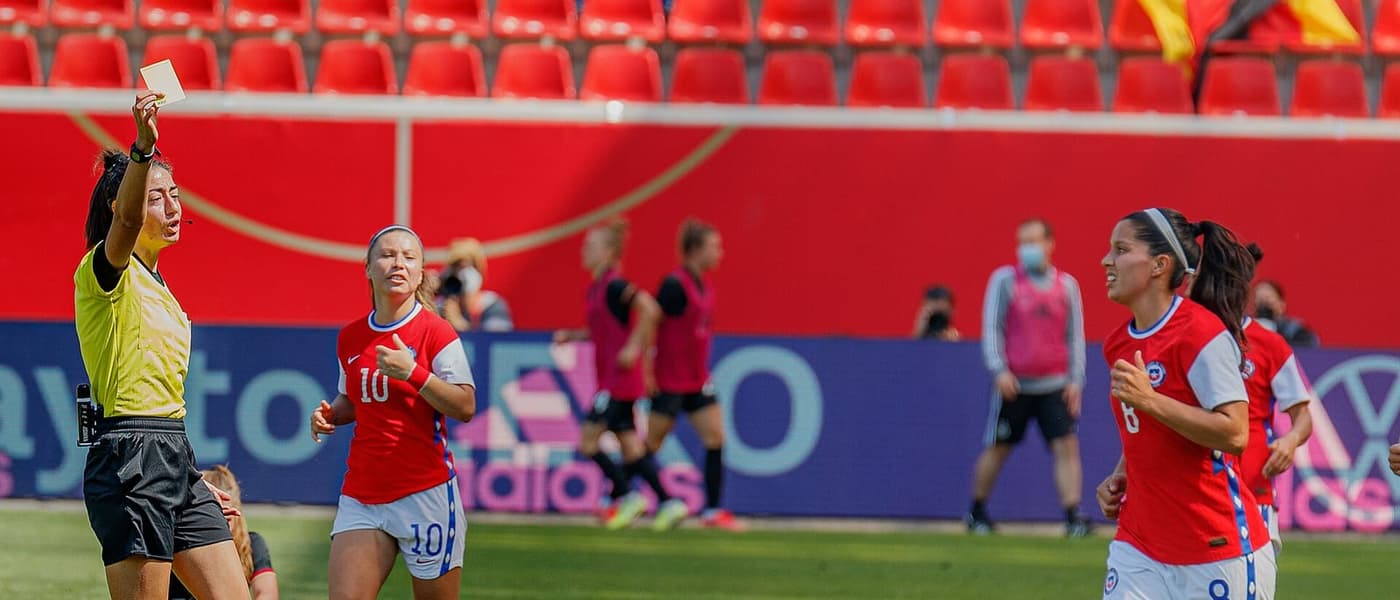
Yellow cards and suspensions at the 2026 World Cup
QuiniPrats editorial team
6 min read
Published on 5 July 2026
FIFA changed the card rule for the 2026 World Cup and 18 players are walking a tightrope before the quarterfinals. See how it reshapes your predictions.
Yellow cards at the 2026 World Cup have gone from a footnote to a decisive factor for your prediction pool. With the expanded 48-team format, FIFA changed the suspension rules, and right now 18 players are walking a tightrope before the quarterfinals. Understanding the 2026 World Cup card rules isn't just for referees: it's direct intelligence for deciding which results you back and which ones you avoid.
In a knockout tie, losing a key striker or a first-choice centre-back can flip a prediction that looked safe. If you know who arrives one booking away from a ban, you hold a real edge over everyone else in your league.
What exactly changed with the new format
Expanding to 48 nations added a new round, the Round of 32, before the Round of 16. That extra round lengthens the path to the final, and to stop a player from carrying cautions across too many matches, FIFA decided to wipe yellow cards TWICE: once after the group stage and again after the quarterfinals.
Until now, World Cup cautions were cleared only once (historically, after the quarterfinals). The double reset is the big change that reshapes the risk math in every knockout tie.
How the two-caution rule works, step by step
- The group stage ends: every accumulated yellow card is wiped. Every player starts the Round of 32 with a clean slate.
- Round of 32: a player picks up a yellow. They now carry an active warning.
- Round of 16: if that same player is booked again, they reach two cautions and are suspended.
- The result: they miss the next match, which is the quarterfinal.
- After the quarterfinals: a second reset. All yellows are cleared again, so no one misses the final on accumulation.
How many yellow cards mean a ban at the 2026 World Cup? Two yellows in separate matches between the Round of 32 and the quarterfinals mean a one-match suspension. On top of that, a straight red card is an automatic ban for the next match, as always.

18 players on the tightrope: why it matters to you
As things stand, 18 players picked up a yellow in the Round of 32. If they see another one in the Round of 16, they will miss the quarterfinals. Many of them are important pieces for their nations: centre-backs who organise the defence, midfielders who dictate play, or forwards who decide games.
For your prediction pool, that raises a key question before you fill in each result: does this team field its full XI, or does it arrive with a threatened player who, if booked, misses the next round? One centre-back short can turn a home-win pick into a draw or an away upset.
How to fold this into your predictions
- Check the probable line-ups and flag which starters carry an active caution.
- In tight matches, give a little more weight to the side with a full squad.
- If a favourite has two or three threatened players, the upset margin grows: consider a draw.
- Remember the ban hits the next match, not the one you're predicting: think in chains, not in isolation.
After the group stage all cards are wiped, and they are wiped again after the quarterfinals. But two yellows before those breaks still mean a suspension for the next match.— — MLSSoccer.com, 2026 World Cup suspension rules
Why FIFA added a second reset
The logic is simple: with one extra round, the path to the final is now seven matches instead of six or fewer. Without a second wipe, a player could slowly stack up cautions across the whole knockout run and end up missing a crucial game over a couple of bookings spread across weeks. The double reset splits the risk into two blocks (Round of 32 to quarterfinals, and semifinals to final) and guarantees nobody misses the final on stale cards. For you, that means the accumulation danger is concentrated in the window from the Round of 32 to the quarterfinals: that's where you watch.
That nuance also tells you when to ease off. A player carrying one yellow in the Round of 16 who survives to the quarterfinals will reach the semifinals with a clean count. Knowing which stretch of the bracket you're in helps you decide whether the suspension risk is actually relevant to the specific match you're predicting.
Straight reds: the rule that doesn't change
Alongside caution accumulation, the classic rule still applies: a straight red card carries an automatic ban for the next match. For very serious offences the suspension can be extended, but the baseline is clear: whoever is sent off doesn't play the following game. Combined with the two-yellow system, there are two routes by which a key player can vanish from a decisive knockout tie.
Want to sharpen up further? Review the lessons from the opening days of the World Cup for your pool.
In the end, these small calls are what separate a winning pool from an also-ran. If you'd like to test your instincts on exactly this kind of detail, set up a prediction pool with friends and see who reads the World Cup best: nothing beats playing it out with the people you know.


Ready to compete?
Put what you've learned into practice and prove who knows football best.
Create free account