
The Invisible Trap at the 2026 World Cup: The 2,200-Metre Stadium (and Extreme Heat) That Will Wreck Your Predictions
QuiniPrats editorial team
6 min read
Published on 11 June 2026
The science is clear: every 1,000 metres of altitude is worth half a goal, and a third of the 2026 World Cup matches will be played in dangerously hot conditions. While everyone else is looking at line-ups, you can win your prediction league by watching the thermometer and the altimeter.
On 1 April 2009, Maradona's Argentina — with Messi on the pitch — lost 6–1 to Bolivia in La Paz. It wasn't a bad day: it was the altitude. At 3,600 metres, the air contains far less oxygen and the ball travels differently. The 2026 World Cup isn't being played in La Paz, but it is being played in Mexico City, at 2,200 metres. On top of that, with heatwaves topping 35 degrees across much of North America. While your prediction rivals are looking at line-ups, you should be looking at the map.
A study published in the British Medical Journal covering 1,460 international matches puts a figure on it: every 1,000 metres of altitude difference shifts the expected result by approximately 0.5 goals in favour of the team accustomed to the altitude.
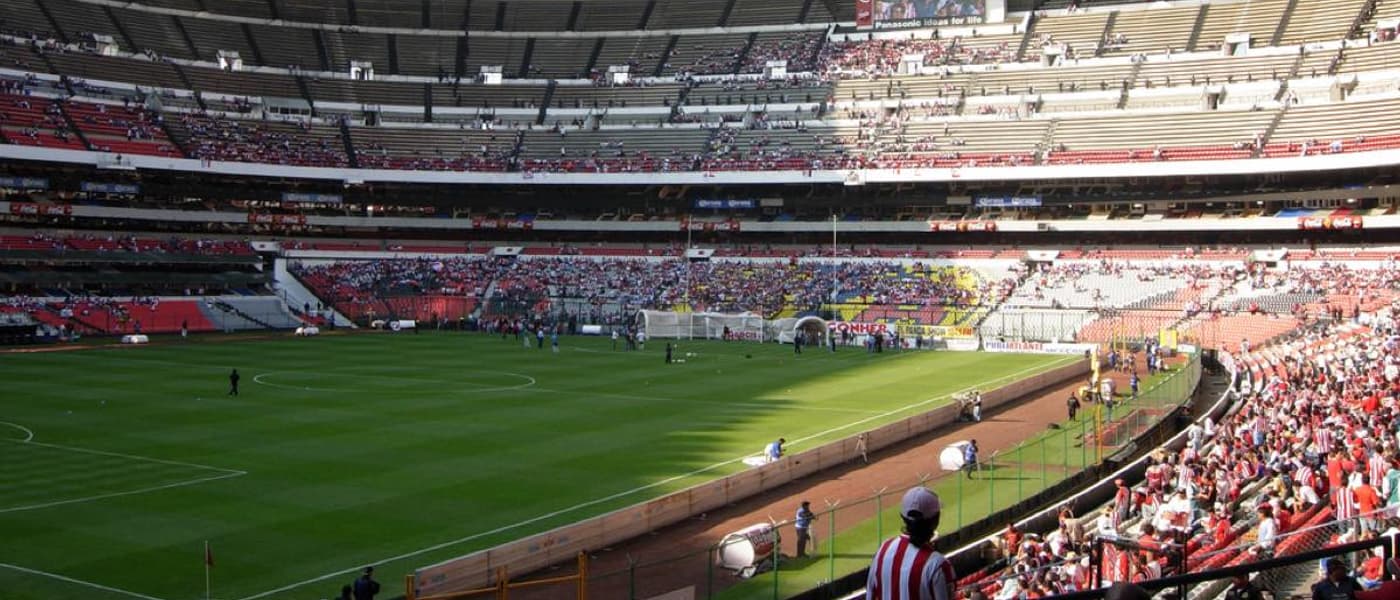
The Azteca: A Fortress at 2,200 Metres
Peak aerobic performance drops by around 6% for every 1,000 metres of altitude, and with the air less dense the ball travels faster and further: long-range shots become lethal and goalkeepers suffer. Mexico knows this, which is why they are almost unbeatable at home: they have lost just TWO official qualifying matches at the Azteca in their entire history. Their two best World Cups — quarter-finals in 1970 and 1986 — were both on home soil, at altitude.
In 2026, the Azteca hosts five matches, including the opening Mexico vs South Africa game and the Mexico vs Czech Republic match on 24 June, plus a round of 32 match and a round of 16 match. Guadalajara, at 1,560 metres, hosts four more. And here is the first trap for your predictions: the Uruguay vs SPAIN match on 26 June is played in Guadalajara. Spain's toughest group-stage opponent, at altitude. Had you taken that into account?
The Heat: The Second Trap (and the Most Dangerous)
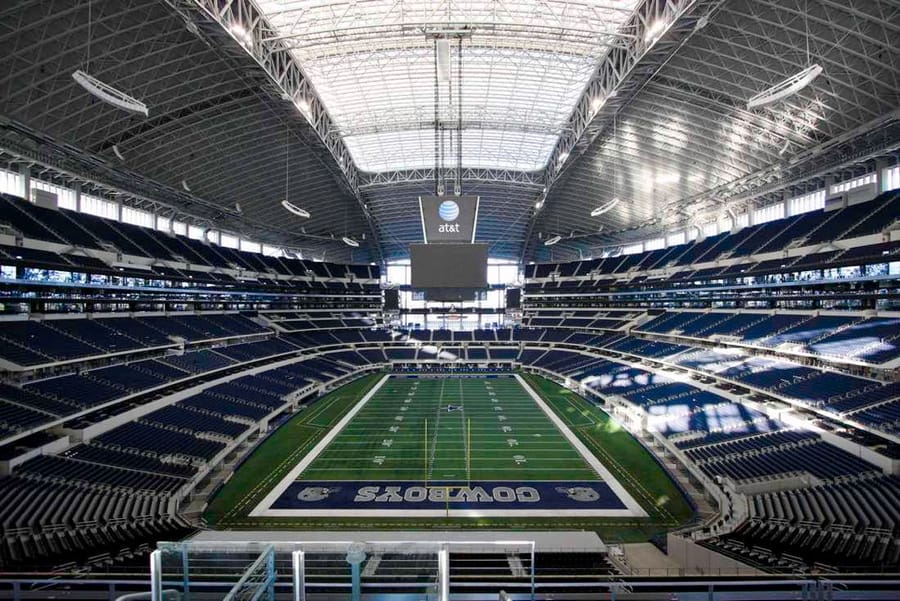
More than a third of the 2026 World Cup matches will be played in potentially dangerous heat and humidity conditions, according to climate analyses published in recent weeks. Dallas, Houston and Atlanta have covered, air-conditioned stadiums — there, heat will decide nothing. The problem lies with the open-air stadiums: Kansas City, Philadelphia, Miami and the MetLife in New Jersey, where afternoons in June and July comfortably exceed 30 degrees with tropical humidity levels.
- Stadiums with a roof and air conditioning: Dallas, Houston and Atlanta — laboratory conditions
- Open-air and hot stadiums: Kansas City, Philadelphia, Miami and MetLife (New Jersey)
- Argentina open their campaign at Kansas City in the open air; the Brazil vs Scotland match will be played in the sweltering heat of Miami on 24 June
- Monterrey: little altitude, but humidity that turns every match into a sauna
The precedent is striking: at the 1994 World Cup in the USA, the Mexico vs Ireland match in Orlando was played with a pitch-side temperature of 41 degrees. FIFA is aware of this, which is why 2026 introduces a historic new rule: mandatory 3-minute cooling breaks at the 22nd minute of each half, in ALL 104 matches. A group of 21 scientists has already warned in an open letter that those breaks are too short to have any real impact.
File this away for your predictions: South American and African teams accustomed to heat and altitude have a quiet advantage in these conditions. Northern European teams, historically, fall apart in the sweltering heat.
Which 2026 World Cup stadiums are at altitude?
Two of the three Mexican stadiums: the Estadio Azteca in Mexico City, at around 2,200 metres above sea level, and the Estadio Akron in Guadalajara, at around 1,560 metres. Monterrey, by contrast, is at around 500 metres — there, the factor is humid heat. All the stadiums in the United States and Canada are at low altitude.
How does altitude affect the result of a football match?
Three measurable effects: less oxygen (aerobic capacity drops ~6% per 1,000 metres), a faster ball (less dense air reduces drag by up to 23% in extreme conditions) and greater accumulated fatigue in second halves. This is why acclimatised or home teams score more and concede fewer at altitude, and why FIFA went so far as to ban matches above 2,500 metres in 2007 (the rule was withdrawn a year later following protests from South American nations).
Play With an Edge: Check the Map Before You Predict
When you make your 2026 World Cup predictions on QuiniPrats, don't just compare squads. Ask yourself WHERE the match is being played: altitude, roof, time of day. The points you pick up in 'shock' results — like Mexico holding a European giant to a draw at the Azteca — are the ones that will win you the league. Your friends will look at the names; you'll look at the thermometer.
Create your free 2026 World Cup prediction league on QuiniPrats and put the altitude theory to the test: 104 matches, 16 stadiums and plenty of invisible traps for the unwary.
Images: Interior of the Estadio Azteca (Jymlii Manzo, CC BY 2.0, Wikimedia Commons) and AT&T Stadium in Dallas (Nicole Cordeiro, CC BY 2.0, Wikimedia Commons).


Ready to compete?
Put what you've learned into practice and prove who knows football best.
Create free account