
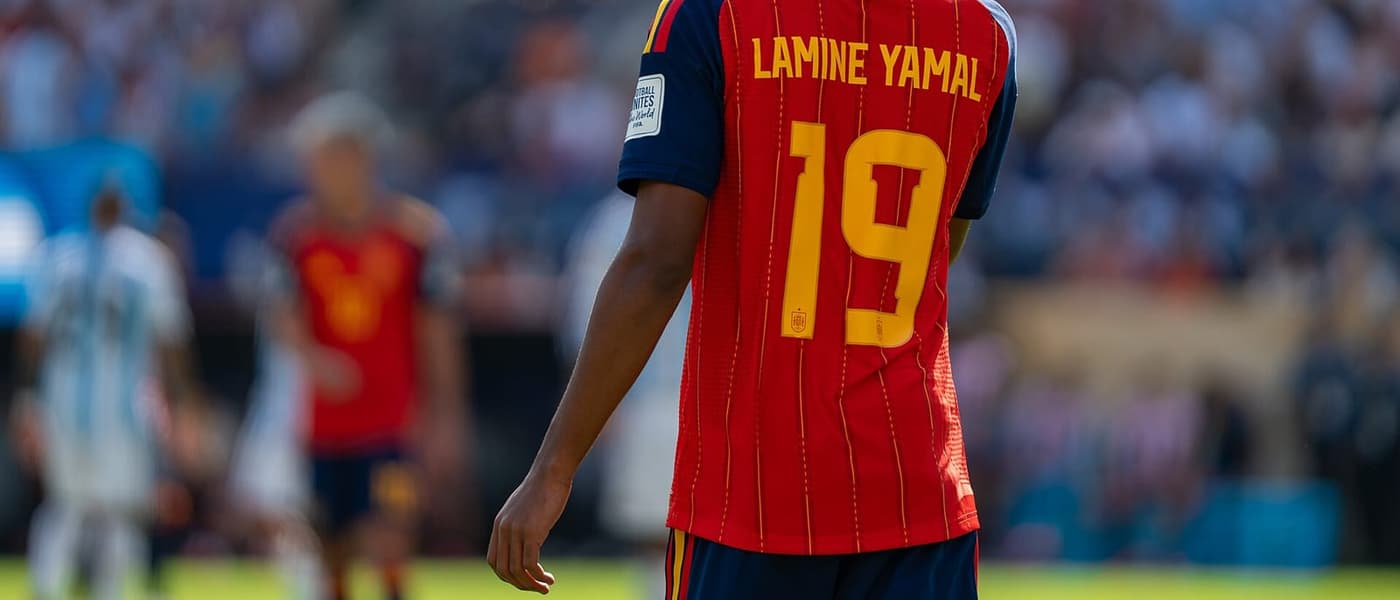
Ballon d'Or 2026: a World Cup isn't enough for Yamal
QuiniPrats editorial team
7 min read
Published on 4 August 2026
Lamine Yamal is a world champion and still doesn't lead the 2026 Ballon d'Or rankings. Harry Kane, out in the semi-finals, tops the lists with 60-plus goals. Here's why, what the World Cup awards tell us, and what gets decided in London on 26 October.
Lamine Yamal lifted the World Cup in New Jersey on 19 July. Two weeks later, he still isn't the favourite for the 2026 Ballon d'Or. That sounds like a mistake, and it isn't: most of the big power rankings have Harry Kane ahead of him, a striker whose England side went out in the semi-finals. If you're wondering who will win the 2026 Ballon d'Or, and why a World Cup winner's medal apparently isn't enough, the answer lives in the calendar, in the goal tallies, and in one award Yamal never got near in America.
Why the 2026 World Cup counts towards the 2026 Ballon d'Or
Start with the dates. The 2026 Ballon d'Or is the 70th edition of the award, and it isn't handed out for a calendar year. It's judged over a season, running from 1 August 2025 to 31 July 2026, and it's only the fifth time in the prize's history that this window has been used. Which brings us to the detail that changes everything: the World Cup in the United States, Canada and Mexico was played across June and July 2026, comfortably inside it. It counts. All of it.
So voters are weighing two very different things at the same time: a full club season and a World Cup. Those two things do not always point at the same player. This year they point at clearly different players, which is how we ended up with one of the strangest debates this award has produced in a long while.
When and where is the 2026 Ballon d'Or ceremony? The gala takes place on 26 October 2026 in London. It is the 70th edition of the award, and it judges everything done between 1 August 2025 and 31 July 2026, which is exactly why the 2026 World Cup is part of the conversation.
Harry Kane: 60-plus goals and no World Cup
The name at the top of almost every list is Harry Kane. The Englishman put together the most productive season of his career at Bayern Munich, north of 60 goals across all competitions, and won the Bundesliga and the German Cup along the way. At the World Cup he scored six, but England bowed out in the semi-finals and he flew home without a single individual award.
- More than 60 goals in 2025-26 for Bayern Munich
- Bundesliga and German Cup in the trophy cabinet
- Six goals at the 2026 World Cup
- England knocked out in the semi-finals
- No individual FIFA award at the tournament
The case for Kane is simple: nobody scored more. The case against him is just as simple: he didn't win the one that mattered most. That tug-of-war between numbers and trophies is the entire history of the Ballon d'Or in a single sentence.
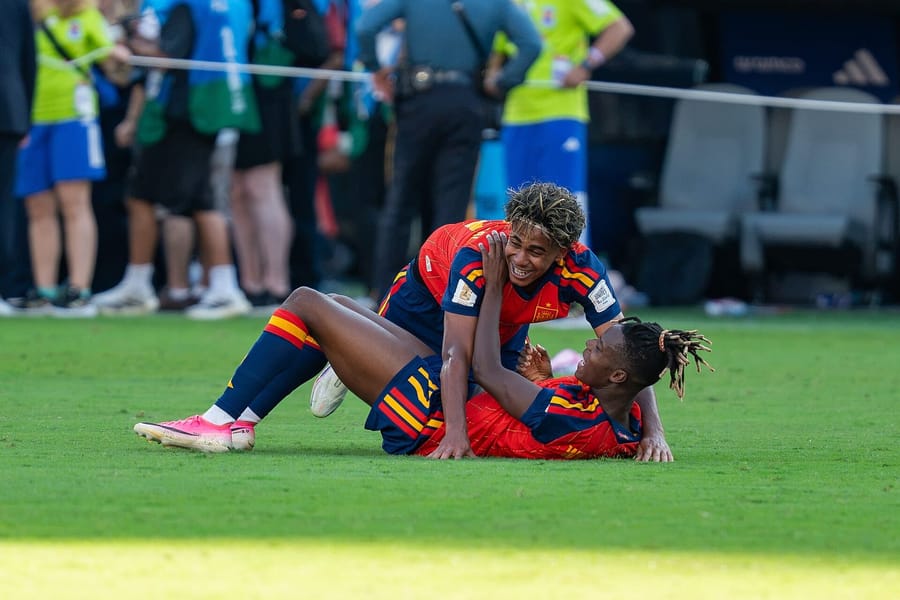
Lamine Yamal: a world champion with one goal to his name
Yamal arrived at the World Cup as one of its billed superstars and left it a champion, but his tournament was quiet: one goal in the entire competition. His club season was another matter altogether, with La Liga and the Spanish Supercopa on the shelf, and that is why he sits second in most rankings. What hurts him is that in the month the whole planet was watching, he wasn't the one deciding games.
He wasn't in the running for the tournament's Golden Ball, or even for its best young player award, which went to another Barcelona teenager in Pau Cubarsí. For a 19-year-old, none of that is a failure. But in a vote this sensitive to narrative, a blank month at the biggest tournament on earth is a heavy thing to carry.
Could Lamine Yamal become the youngest Ballon d'Or winner ever? Yes. The record belongs to Ronaldo Nazário, who won the 1997 award at 21. Yamal is 19, so if he takes it on 26 October he would be the first teenager ever to win the Ballon d'Or.
Rodri and Mbappé: the World Cup awards that scramble the race
If the World Cup counts, it's worth asking who actually won something individually in America. None of it went to Yamal.
- Golden Ball (best player): Rodri, Spain
- Silver Ball: Lionel Messi, Argentina
- Bronze Ball: Kylian Mbappé, France
- Golden Boot: Kylian Mbappé, 10 goals, the first player to win it twice
- Golden Glove: Unai Simón, Spain
- Best Young Player: Pau Cubarsí, Spain
Rodri is the most intriguing name on that list. He came back from a serious knee injury, won the FA Cup and the Carabao Cup with Manchester City, and was then voted the World Cup's best player ahead of both Messi and Mbappé. World champion and player of the tournament: if that were the only criterion, this argument would have ended on 19 July.
Mbappé made history of his own with the Golden Boot: ten goals, and the first footballer ever to win it twice after his 2022 award. His problem was the closing stretch of his season at Real Madrid, disrupted by a knee injury that cost him rhythm at precisely the point where recent memory weighs heaviest on voters.
The six men still in the 2026 Ballon d'Or race
As things stand today, this is roughly the field:
- Harry Kane (Bayern Munich): the goalscorer. 60-plus goals and a domestic double, but no World Cup.
- Lamine Yamal (Barcelona): world champion, La Liga and Supercopa, on the back of a flat tournament.
- Rodri (Manchester City): World Cup Golden Ball, world champion, FA Cup and Carabao Cup.
- Kylian Mbappé (Real Madrid): World Cup Golden Boot and Bronze Ball.
- Ousmane Dembélé (PSG): the 2025 winner, with the Champions League and Ligue 1 this season.
- Lionel Messi (Inter Miami): World Cup Silver Ball with eight goals, and an MLS Cup at 39.
One important caveat before anyone calls it: the official 30-man shortlist hasn't been published yet. Until France Football releases it, everything you read on this subject, this article included, is a forecast rather than a vote.
Football's oldest prediction game
And here's the fun part. The Ballon d'Or is really football's oldest prediction game: everyone has a favourite, everyone has an argument, and everyone is quietly certain the voters are about to get it wrong. This year there's an extra twist, because the two leading candidates stand for opposite ideas of what being the best actually means, the man who scored the most or the man who won the World Cup.
If you fancy taking that argument somewhere beyond the group chat, quiniPrats lets you set up a prediction league with friends and go week by week now that La Liga is back under way. No rush, mind: 26 October will still be there when you want to find out who was right.


Ready to compete?
Put what you've learned into practice and prove who knows football best.
Create free account